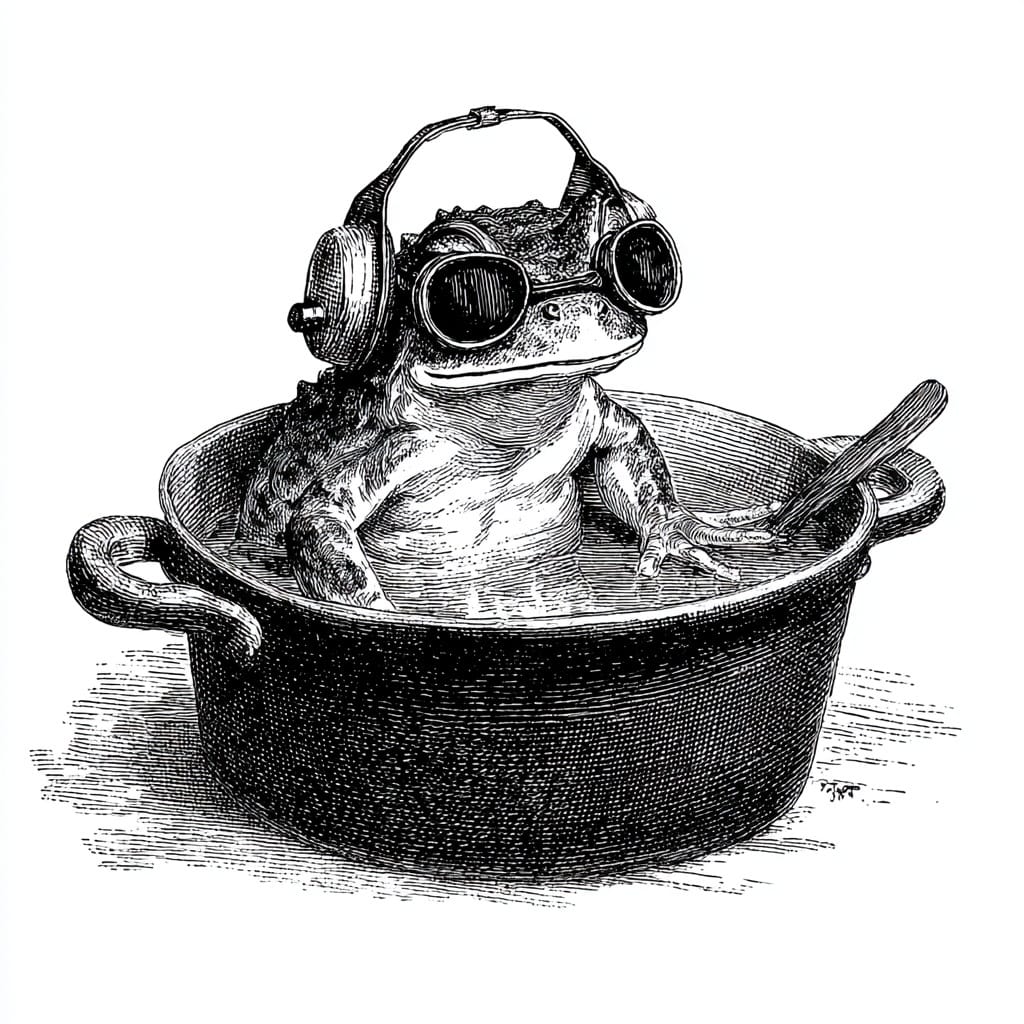
AI, Alchemy and Apple...
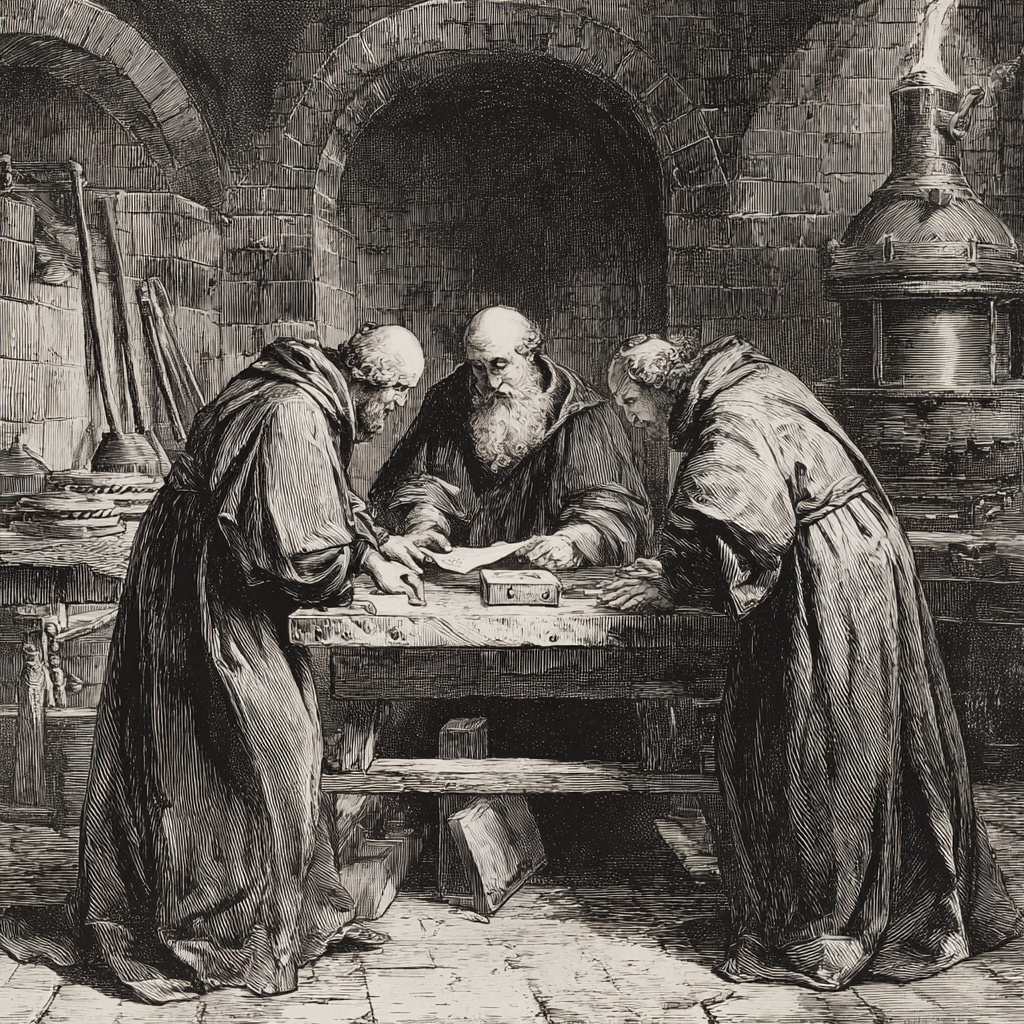
In the alchemical tradition, the athanor was the furnace at the heart of the practitioner's work. It was not glamorous. It was not the philosopher's stone, nor the dramatic moment of transformation; it was the steady, patient vessel that maintained the conditions in which transformation could happen. Holding the right temperature, sustaining the right pressure, day after day, while the work proceeded. The athanor made everything else possible.
I think that the Mac mini with Apple's latest M4 chip might be a modern athanor, and its timing feels significant. It sits quietly on the desk, not much larger than a hardback book, consuming less power than a light bulb. If you didn't know what it was, you might mistake it for a speaker or a paperweight with ambitions above its size. I'm exploring its potential not as a technologist but as a practitioner, in the sense that The Athanor has been developing: someone interested in what becomes possible when the right conditions are held steady long enough for real work to happen.
A Clarifying Moment?
We are experiencing what I would call the Great Rationalisation. Artificial intelligence is sweeping through organisations much as mechanisation once swept through factories, reducing roles, merging layers, standardising tasks once considered skilled and specialised, and leaving in its wake much fear and uncertainty.
The middle tier of most professions is shrinking. Anything that doesn't involve doing the actual work is being delegated to a team of small computers. Tasks that once required a team of twelve over a couple of days might now be completed by a well-configured AI system in an hour, with three people.
For many people, this is frightening, and I understand why. There is, though, another way of reading it that requires us to look not only at what is being lost, but at what is being left behind, because the rationalisation is not total. It is, in fact, quite selective.
What AI handles well is procedural work that can be described in steps, follows patterns, and produces outputs checkable against a template. What it handles poorly, still, and perhaps structurally, is work that requires considered judgment in genuinely messy situations. The kind of knowledge that lives in hands, instincts, and long experience. The kind of reading of a room, a landscape, or a person that cannot be reduced to a data set.
The Greeks called it mētis. Cunning intelligence. Practical wisdom. The knowledge that only comes from having done the thing repeatedly, in conditions that never quite repeat.
This knowledge is not disappearing. If anything, it is becoming more structurally valuable precisely because AI cannot replicate it. The question is how the people who hold it might put it to work.
A Digital Athanor?
Until recently, running sophisticated AI tools required either expensive specialist hardware or complete dependence on cloud services, meaning your work was processed on someone else's computers, under someone else's terms, at your expense. For large organisations, this was manageable. For individual practitioners and small groups, it was often unaffordable or simply not worth the complexity. And there was a further cost: to work with those services, you had to fit their model. Large organisations want people who fit their existing offerings. They are not interested in idiosyncrasies or small, interesting projects. They want volume, not complications.
The M4 chip quietly but profoundly alters this. It enables a small, affordable, desk-sized device to run AI assistants locally, on your own hardware, in your own space, and under your own control, while integrating seamlessly with more powerful cloud-based tools like Claude when the task demands it. I think of it as a local craft workshop, an atelier, that can summon a master craftsman when specialist input is needed. Someone who will work with us on our terms, rather than a consultant keen to reuse work they've already done elsewhere.
It can run multiple AI processes at the same time: one handling research, another managing documents, a third monitoring a project workflow, while you get on with the work only you can do. Continuously, without burning through cloud costs, and without sending sensitive client material anywhere you haven't deliberately chosen to send it.
This is not just a performance upgrade. It represents a shift in what can be achieved. Small, innovative clients and genuinely unique projects can now access resources that were unavailable just a few years ago. We can collaborate with individuals directly. There's no need for the old labels of product sectors, demographics, and psychographics.
We can simply work with interesting people, on their own terms.
Selling Shovels
There is an old observation about gold rushes: the people who reliably made money were not the prospectors, but the merchants selling shovels. The prospectors were betting on finding gold. The shovel merchants were betting on the near-certainty that people would try.
Apple is making shovels. Mac mini sales have been accelerating sharply as the AI wave has gathered momentum, not because Apple has built a flagship AI product, but because it has built the infrastructure that serious practitioners need to do their own AI work. They are not betting on which applications will win. They are betting on the near-certainty that capable, independent people will want to work seriously with these tools, and will want to own rather than merely rent the means of doing so.
That distinction matters. Most of the AI industry is built around services: you depend on someone else's system, your work passes through their servers, and the relationship is ongoing and extractive. They sell a service and create dependency. Apple is selling you a forge. Once you own it, the work you do is yours. All you need is to understand how to wield it, and AI has now made that considerably easier than it was. I am no technical wizard, but setting up a Mac mini with low-cost tools like Ollama and n8n, which handle local AI processes, looks achievable with a little learning.
Shovelling the Wreckage into the Athanor
When industries rationalise rapidly, they don't simply compress; they discard the things and people that were bundled inside them because it was administratively convenient to bundle them. Ways of working, local knowledge, relationships, specialist expertise that was never quite visible enough to be formally valued: all of it gets left in the rubble.
That rubble is where the gold lies. Not everything discarded in a rationalisation was genuinely obsolete. Much of it was simply inconvenient for the new model. And the almost comic part is that we don't have to do the digging, just the sifting. The people best placed to retrieve what matters are those who understood its value in the first place: practitioners with deep experience, boundary-dwellers who have worked across multiple worlds, craftspeople whose knowledge lives in practice rather than procedure.
What has historically limited these people is not insight or capability. It is bandwidth and access. A skilled independent practitioner has always been constrained by the number of hours in a day, the clients they can hold in mind, the administrative overhead of working without institutional support, and the expense of tools that only large organisations could previously finance. AI, used with imagination and genuine intent, can change this. Not by replacing the practitioner's judgement, but by handling the bureaucratic surround that eats into the time available for actual work.
The Mac mini as an athanor makes this practical rather than aspirational. An experienced consultant, a skilled adviser, a researcher: each of these people can now maintain a personal AI infrastructure that operates continuously in the background, preparing briefings, monitoring relevant developments, drafting correspondence, managing documents, and flagging connections between clients and contexts. The practitioner's day becomes more fully dedicated to what only the practitioner can do. The infrastructure is in service of the mētis, not a substitute for it.
Agency, Not Just Efficiency
The productivity case for personal AI infrastructure is real, but it is not the most important case. The more significant argument is about agency: about locus of control, about who shapes the tools of your practice, and on whose terms your work proceeds.
The AI being rolled out across large organisations is designed to standardise. Its purpose is to make outputs more consistent, more predictable, and more auditable. This serves the institution, but often sits in direct tension with individual practice. The experienced professional who has developed a distinctive way of reading situations, a particular method of building trust, a hard-won feel for what works in their domain: none of this transfers well into a system optimised for uniformity. When I look back at how much value was left on the table in projects I led, simply because it was too inconvenient to explore in the time available, I wince.
Personal AI infrastructure, by contrast, can be shaped around the practitioner and the client, not the institution. The athanor serves the work, not a standardised production schedule.
This matters especially for those working in fields where trust, nuance, and judgment constitute the entire product. For those challenging convention and operating at the outer edge of what is currently considered best practice. Big Tobacco was not an isolated case; the tendency of large corporate cultures to protect the status quo rather than engage with what comes next is widespread and well-documented.
What is emerging from the wreckage cannot be improved through standardisation. It will be developed by deepening individual expertise, widening personal reach, and attending to the small, specific details that make work genuinely useful to real people. Which is exactly what a thoughtfully configured personal AI infrastructure can support.
The Steady Heat
The alchemical athanor worked because it was patient. It did not produce the transformation. The practitioner, the materials, and the chemistry produced that. The athanor simply held the conditions steady, day after day, so the work could proceed.
This is, I think, the right way to consider what the Mac mini offers. It is not a magic box. It will not transform an unskilled practitioner into an expert, nor replace the years of experience that generate genuine mētis. What it can do, quietly, continuously, at very low cost, is maintain the conditions in which excellent practice becomes more fully achievable.
In the next post, I want to explore what this means in practice – for small cohorts of practitioners working together, and for what a modern Lunar Society model might actually look like when it has its own forge.
Comments ()