Conversations as Ecosystem
When we talk about the failure of organisations or societies, our language tends to be structural. We point to broken institutions, outdated business models, political polarisation and technological disruption. Our instinct is to pursue redesign: new strategies, new systems, new rules, new tools.
I think this misses the deeper problem.
Beneath our structures sits something more fundamental and more fragile: the quality of our conversations. Not the volume of communication, which has never been higher, but the capacity of our conversations to develop, to mature, and to transform what they hold. When our conversations lose that capacity, organisations hollow out and societies fracture, regardless of how impressive the metrics of growth may appear.
This is not a sentimental argument about talking more nicely to one another. It is a developmental one. Conversations, like people and organisations, age. They pass through stages. They can mature, stagnate, calcify or renew. The stage our conversations are stuck in will determine whether we are capable of meeting the conditions we now face.
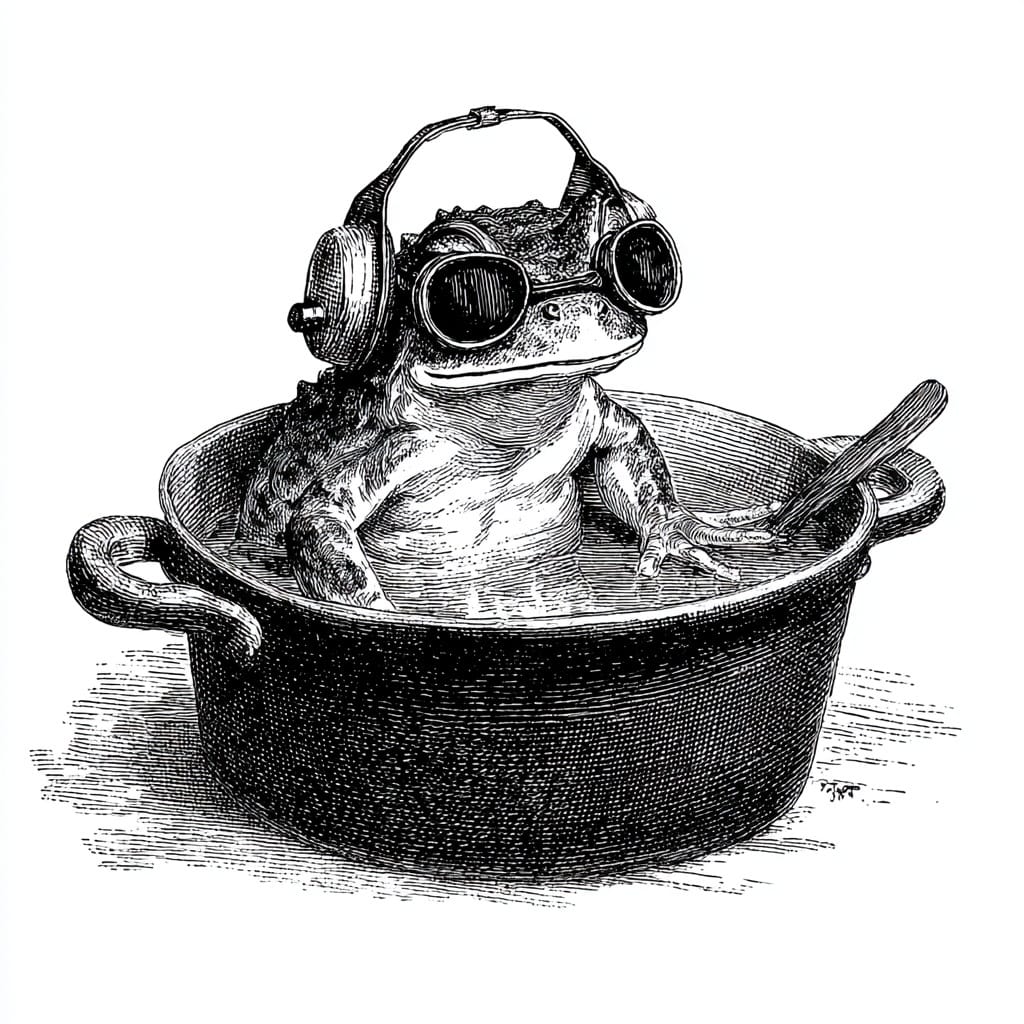
In the Athanor, old material is slowly transformed into something new, and it offers a useful way of thinking about this. In alchemy, nothing is created from nothing. Transformation requires heat, time, containment and patience. The raw material is not discarded, it is worked.
Our conversations are our Athanor. They are the crucible in which the old is broken down and recombined into the new. When they are healthy, renewal becomes possible. When they are not, no amount of structural reform will save us.
How we grow up, and why it matters here
Developmental science is quietly dismantling the idea that human maturity is a simple, linear progression. We do not steadily become more capable in all respects as we age. Instead, we pass through distinct developmental phases, each with its own strengths, vulnerabilities and characteristic forms of creativity.
Childhood is a period of abundance. The brain overproduces connections. Play, exploration and experimentation dominate. Learning is rapid and lightly constrained. Regulation comes primarily from outside.
Adolescence is not simply an extension of childhood. It is a period of rewiring and identity formation. Social sensitivity increases. Emotions run high. Risk-taking and originality peak, but so does volatility. Executive control is strengthening, but uneven, and recent research suggests that this phase extends well into our early thirties.
Adulthood brings integration. The mind becomes better able to hold complexity without constant drama. Emotional regulation improves. Creativity becomes less about raw novelty and more about synthesis, judgement and application, as we find our place in the world, often shaped by the earlier stages of our lives.
Later life shifts the balance again. Pattern recognition deepens. Perspective lengthens. Openness to novelty narrows unless deliberately cultivated. Experience creates Wisdom, even as plasticity declines.
The point is not that one stage is better than another. Each is fit for different tasks. Problems arise when development stalls or when we attempt to skip stages entirely. Healthy maturity does not suppress earlier capacities. A healthy adult retains access to play, curiosity and imagination if we create the conditions, even while adding restraint and judgement.
This matters because the same developmental logic appears wherever living systems are asked to learn over time.
Organisations age because their conversations do
If we stop treating organisations as static entities and instead see them as collections of conversations, a different picture emerges. Strategy is a conversation about the future. Culture is a conversation about what matters. Power is the ability of some conversations to override others. Learning is the capacity of conversations to change what they hold.
Seen this way, organisational health depends less on formal structure than on conversational maturity.
Early conversations resemble childhood. They are exploratory, energetic and open-ended; ideas collide freely, and meaning is emergent rather than fixed. These conversations are essential for discovery but fragile; without rhythm or boundaries, they repeat themselves and never converge.
Like Peter Pan, they remain in a permanent state of childhood.
As conversations mature, they enter an adolescent phase. Identity and status move to the foreground. Disagreement becomes personal, and performative debate replaces inquiry. Tribes and silos form. This phase can be creatively powerful, but it is emotionally charged.
Many organisations spend most of their lives here, mistaking heat for progress.
Adult conversations feel different. They are framed and purposeful without being rigid. Divergence and convergence are balanced. Disagreement can be held without rupture, and decisions emerge as integration and judgement shape the dialogue.
It is where creativity takes form.
Over time, conversations can age further. Memory and precedent begin to dominate. Politeness becomes protective. Contentious or disruptive topics are quietly avoided. Instead of enabling wisdom, these patterns narrow the field of possibility. Renewal requires deliberate exposure to younger conversations, just as ageing minds benefit from engagement with unfamiliar ideas.
This is where creativity atrophies.
Organisations rarely fail because they lack intelligence or effort. They fail because their conversations stop developing. Transformation stalls not because people do not care, but because the conversational vessel has lost the capacity to change what it contains.
The Athanor as a conversational space
Alchemy is a metaphor here, not as mysticism but as process. The Athanor is not a machine; it is a vessel that holds material under sustained heat, enabling slow transformation. The work is patient. Material is not replaced. It is recombined.
In this sense, the Athanor is defined by the quality of its conversational space. Old assumptions can be held long enough to be examined. Disagreement does not immediately harden into a defence of identity. Time is allowed for insight to emerge rather than be forced. Decay is permitted to allow something else to form.
Healthy conversations act as Athanors. They allow the old to break down without being prematurely discarded. Unhealthy conversations either avoid the heat, clinging to certainty, or apply it so aggressively that nothing survives intact.
Much of what we call change fails because it bypasses the Athanor entirely. Under pressure, we leap to solutions before the raw material has been worked. We mistake movement for transformation. Conversations that scale before they have depth collapse under pressure. Projects that expand before their identity stabilises lose coherence. Strategies that leap from exploration straight to execution fail not because they lack ambition, but because they do not spend enough time in play.
Conversations also fail when they declare clean breaks. People take sides. Earlier stories are disowned, and reinvention is attempted through forgetting. Alchemy suggests a different approach. Healthy development integrates earlier stages, including what has been learned, rather than replacing them. Adult conversations still need childhood play, and ageing conversations need youthful input rather than denial.
It's messy, because it needs to be.
Disturbance, ageing and renewal
The difficult conversations we avoid are often our primary infrastructure for resilience. When cost-cutting or restructuring severs informal conversational networks, it is not pruning dead wood. It is destroying the raw material from which the next stage of growth might emerge.
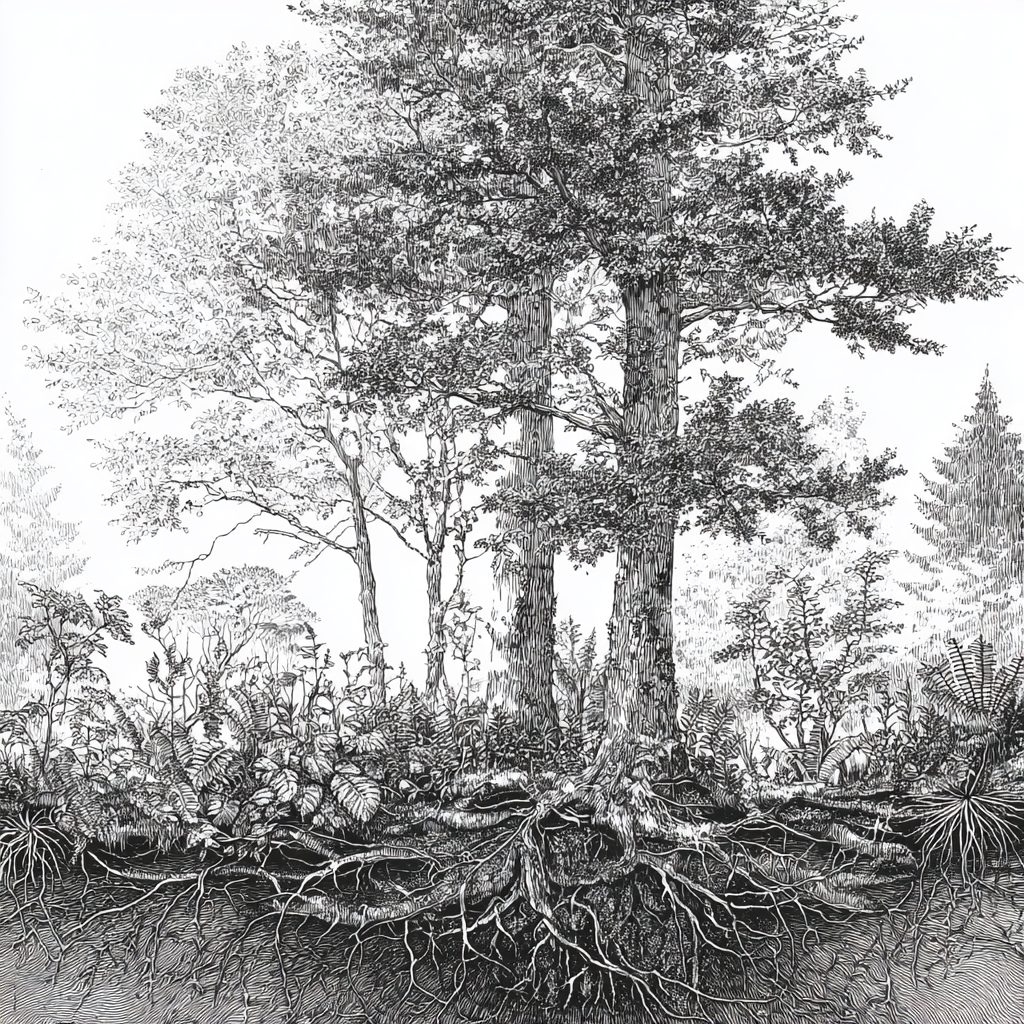
Ecological systems do not treat disturbance as failure. Fire, storms, pests and decay are developmental mechanisms. Fire releases nutrients, and storms create gaps in the canopy. Decay creates soil.
By contrast, we tend to treat disturbing conversations as something to be eliminated. Conflict is suppressed, endings are avoided, and uncertainty is framed as a risk to be minimised rather than a signal to be explored.
The result is fragility.
As we age, we face a similar choice. We can cling to certainty, protecting identity and reputation, or we can remain engaged with difference, allowing our perspectives to be challenged. Ageing can bring wisdom or rigidity. The difference lies in whether we continue to participate in living conversations.
Organisations face the same choice. Ageing organisations are not doomed, but renewal requires something many find difficult. Letting go of the need to be right. Letting go of the need to be central and in control. It requires allowing younger conversations to form, even when they challenge the stories that built the institution.
Decay is not optional. It is how living systems stay alive. The Athanor requires both heat and breakdown. Without them, nothing new can emerge.
Society as a conversational system
At a societal level, the stakes are higher still. Polarisation, mistrust and fragmentation are often described as failures of politics or media. They are also failures of conversational development.
Many public conversations are stuck in adolescence. Identity, status and signalling overwhelm inquiry. Performative outrage replaces sensemaking. The capacity to hold disagreement without rupture erodes.
At the same time, many institutions behave like ageing conversations. Precedent trumps curiosity. Politeness masks paralysis, forbidden topics multiply, and renewal feels threatening.
We have become a society rich in communication but poor in conversation. Information flows freely. Meaning does not.
If this diagnosis is even partly right, then the work ahead is not primarily technical. It is developmental. We need spaces where conversations can grow up, and others where they can become young again.
A quieter conclusion
Across societies, organisations and ecosystems, the pattern is consistent. Development moves through exploration, differentiation, integration and eventual rigidity, punctuated by renewal through disturbance. Failure comes from mistimed control, from suppressing earlier capacities, or from mistaking stability for health.
Transformation is not an act of will. It is a process of attention. It requires holding what we already have under sufficient heat, for long enough, so that something else can form.
Conversations are a distributed resource. The future does not emerge from a single central conversation, but from many small conversations at the edges. These are experiments in possibility. Most will go nowhere. A few will matter enormously.
If the health of our conversations determines the health of our organisations and our society, then this is where the work lies. Not in protecting what is failing, but in tending the vessels in which the old might yet become something new.
Comments ()