The Alchemy of Value
Seeing the World Differently.....
There is a discipline to dealing with uncertainty. It starts with not reacting in the moment and taking the time to calmly consider what is really going on. Standing back enough to sideline, for a time at least, our visceral reaction to what we're dealing with when it conflicts so strongly with our values and what we believe to be important. As I write this, we have no shortage of visceral material. It can feel like we're in a live version of Gladiators meets Traitors. I wonder what Dickens would have made of it.
"It was the best of times, it was the worst of times, it was the age of wisdom, it was the age of foolishness, it was the epoch of belief, it was the epoch of incredulity, it was the season of Light, it was the season of Darkness, it was the spring of hope, it was the winter of despair, we had everything before us, we had nothing before us, we were all going direct to Heaven, we were all going direct the other way—in short, the period was so far like the present period, that some of its noisiest authorities insisted on its being received, for good or for evil, in the superlative degree of comparison only" . The opening of The Tale of Two Cities, Charles Dickens.
I am left with a clear impression that, at the heart of the conflict, are different relationships to the idea of value. On the one hand, a mindset that seems to suggest that value lies in what already exists, like rare earth minerals, gold, oil, and anything else the acquisitive might define as a resource in finite supply, where the challenge is to acquire it by whatever means necessary, then trade it for an advantage. After all, when around 40% of the United States of America was acquired through purchases, treaties, and annexations rather than settlement, it makes sense. Why bother creating art, music, or anything else when you can buy what others have already made, or nature itself has given us and get a calculable ROI? Why would we not focus the astonishing energy and creativity of our countries on building weapons and technology that enable extraction and extortion rather than creation? Why would we choose to retain and nurture relationships that offer the basis of long-term prosperity when they do not offer the short-term return that shareholders demand?
Looked at through that lens, our current cast of antagonists is not the problem; they are a symptom of the problem. Whilst they may have unappealing characteristics and qualities, they are not the root causes of the challenge we face.
The root cause, I suggest, is different understandings of value. On the one hand, something that can be identified, measured, analysed, and traded as tangible wealth, which, when combined with a culture of urgency, efficiency, and productivity, makes acquisition rather than creation an attractive option.
On the other hand, value as the sum of qualities grounded in concepts far beyond the reach of measurement, such as beauty, fairness, and justice, which determine values and cultures over generations, not quarters.
If the fault line we are tracing runs between value as something to be seized and value as something to be shaped, then part of our difficulty lies in how we have trained ourselves to see, and perhaps more tellingly, in what we have trained ourselves not to see.
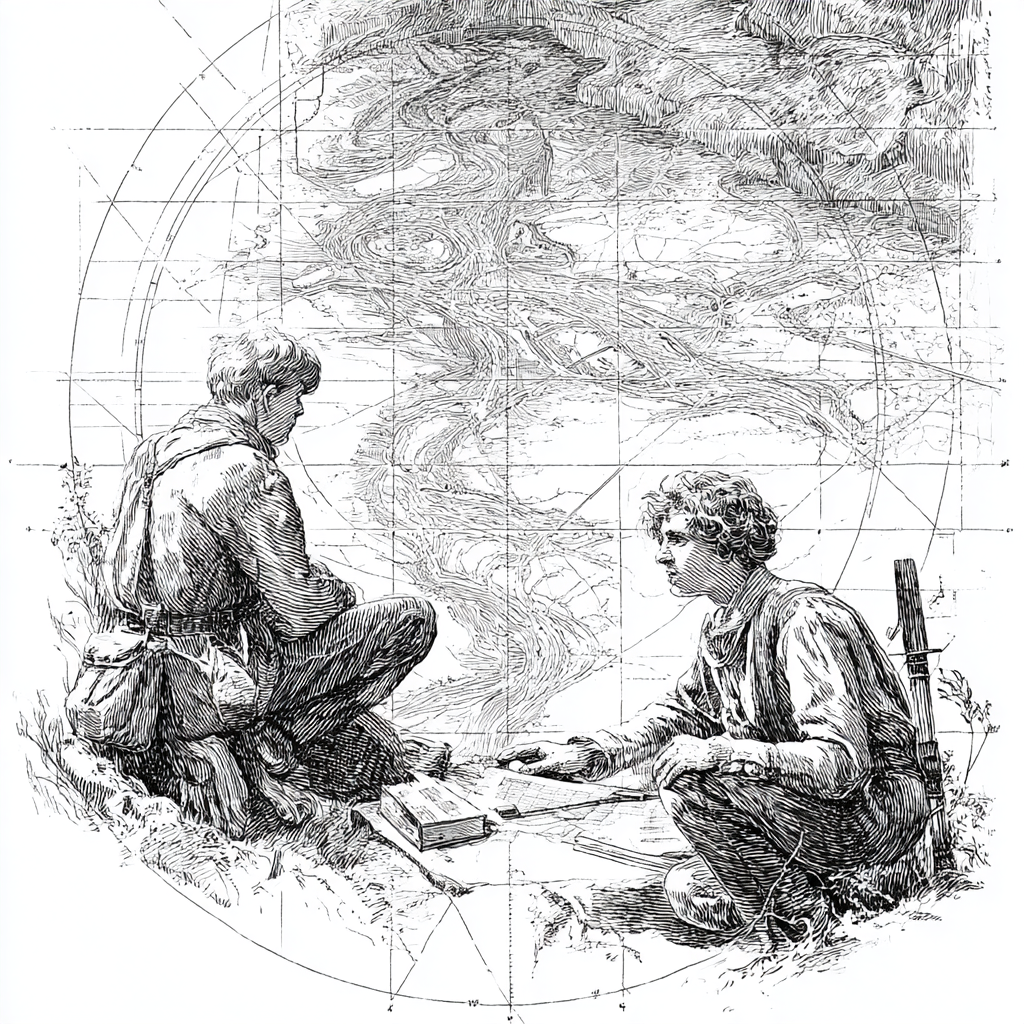
Two ideas offer a useful corrective here, precisely because they sit awkwardly with the extractive, transactional view of value that has become so dominant. The first comes from Kurt Lewin, one of the founders of modern social psychology, who distinguished between what he called Region Alpha and Region Beta. Alpha refers to the world as it can be described in objective, physical, and measurable terms. Beta refers to the world as we experience it at a human, embodied level. The second comes from James C. Scott, the political scientist and anthropologist, who writes about Mētis as practical, local, embodied knowledge, which I have touched on in earlier posts.
These ideas redirect our attention away from what is easily captured and towards what is quietly formative. Region Beta asks us to take the world seriously as it is experienced, not just as it is measured; it insists that we do not inhabit a neutral landscape of facts and resources, but a world thick with meaning, memory, fear, hope, and identity. Value, in this sense, is not simply what can be priced or traded, but what shapes how people feel about their place in the world and their relationship to others.
Consider what this looks like in practice. When an organisation measures engagement through survey scores while people experience their workplace as increasingly disconnected from meaningful work, that gap between Alpha and Beta becomes a space where value quietly drains away. The metrics may improve whilst the experience deteriorates. Region Beta asks us to notice that contradiction and take it seriously.
It reframes the distinction between value as extraction and value as creation in an important way. The problem is not only that we are stripping landscapes, markets, or institutions of what can be sold, but also that we are shaping experiences in which people come to feel that worth lies primarily in what can be owned, accumulated, or leveraged.
Over time, that becomes a culture, not just an economy.
Beauty, fairness, and justice, which sit beyond the reach of measurement, inhabit Region Beta. We know them, not because they can be calculated, but because their absence is felt. A society that erodes them may still grow richer in the narrow sense, while becoming poorer in the only sense that endures across generations.
Mētis brings us from perception into practice; it describes the kind of knowing that arises from being embedded in particular places, practices, and relationships; it is the capacity to act well in situations that refuse to be reduced to general rules or clean metrics. It is the nature of a craft relationship with what we do and an intimate understanding of the nature, people, environments, materials, and context in which we work. It matters because the creation of value, in this richer sense, is rarely the result of applying universal, abstract formulas at scale. It emerges from judgement exercised under constraint, from attention to context, from the slow accumulation of practical wisdom. Art, craft, institutions, even just forms of decency, are not extracted from the world like minerals. They are grown, shaped, and sustained through practice.
Where an extractive mindset seeks to bypass this slow work by substituting acquisition for creation, mētis insists that certain forms of value cannot be shortcut without being destroyed in the process. We can buy a building, but not a culture, and acquire a company, but not its trust. We can copy a technology, but not the judgement that allows it to be used well.
Together, Region Beta and mētis suggest that the contest is not merely between different economic strategies, but between different relationships to the world itself. One treats the world primarily as a stock of assets. The other treats it as a field of relationships, meanings, and practices in which value is continuously made and unmade.
This brings us back to the importance of not reacting and of standing back from the visceral because what is at stake here is not only how we respond to today's headlines, but how we choose to orient ourselves in a world that increasingly rewards speed, scale, and seizure over patience, depth, and care.
Region Beta asks us to notice how our systems feel to live in. Mētis asks us to notice how they are actually navigated in practice. Between them, they offer us a way of re-entering the question of value that neither retreats into abstraction nor collapses into outrage, but stays with the slow, demanding work of understanding how values are really formed, sustained, and sometimes quietly lost.
This capacity to hold different views of value without collapsing into one or the other, to recognise both the measured and the experienced, the universal and the particular, is at the heart of the work in The Athanor.
Not to take sides, but to hold the space in between the different views in order to enable those we work with to synthesise approaches that work for them and the work they are choosing to do.
The Beta / Mētis framework offers a way of doing this that acknowledges the legitimacy of different value systems whilst remaining alert to what gets lost when one completely dominates the other.
I look forward to exploring this with those of you who can join our conversation on Wednesday evening, 5 o'clock UK time, on Zoom.
Comments ()