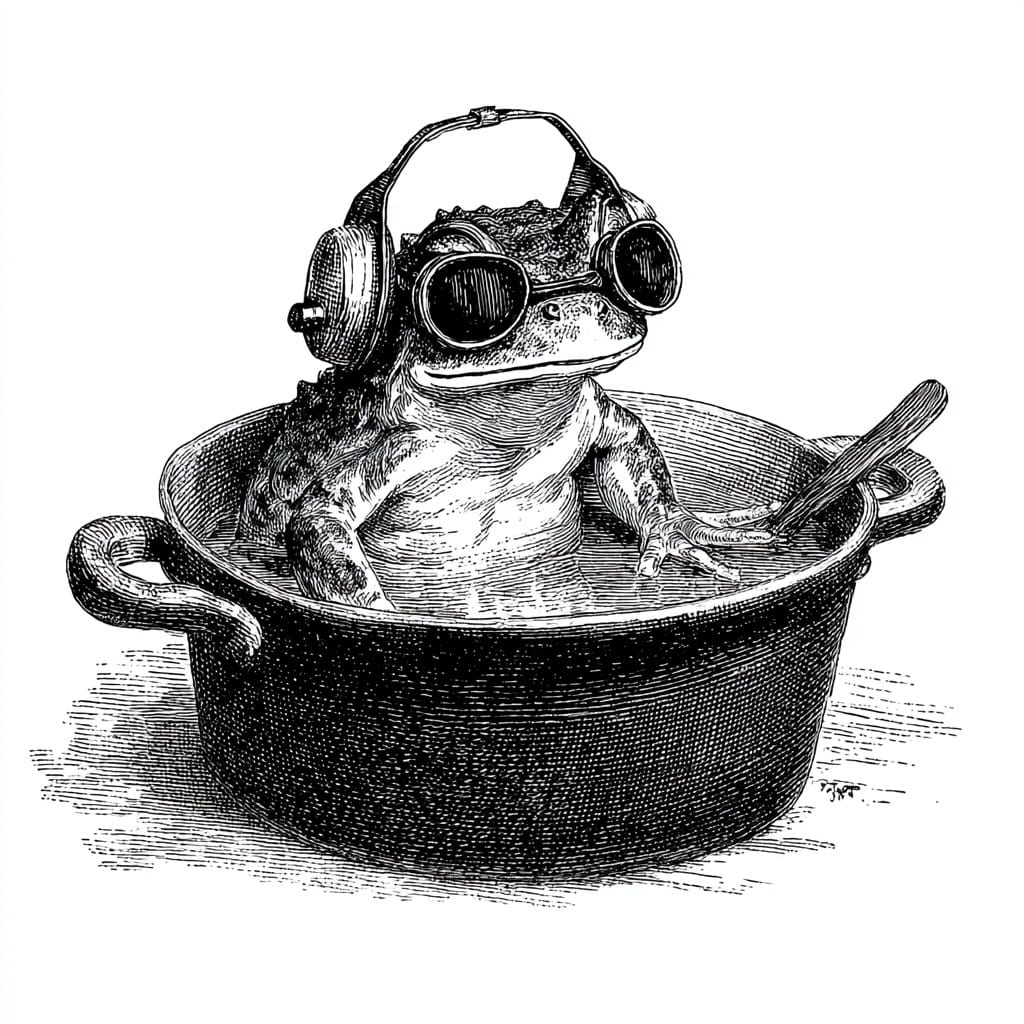
The Journey So Far. Part 3.
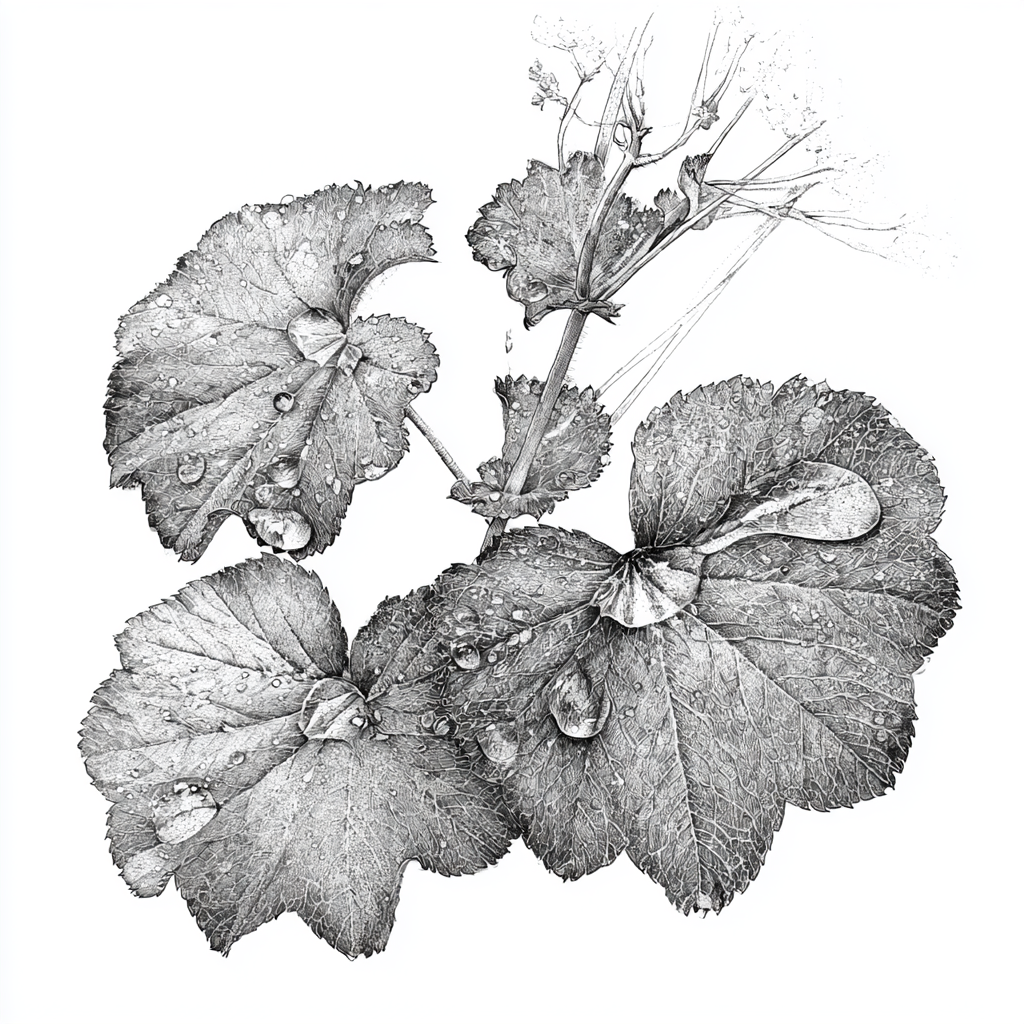
The Cut
A review. Part three of three.
I left winter with a question hanging: what do we bring to the container that the Athanor is?
The spring answered it in the way this space answers anything, through experiment, in public, with the results posted whether they flattered us or not. This final part of the review runs from late February to the present, and has disclosures to make; about the experiments, about a colleague the archive has kept off stage, and about what the Athanor has become while nobody was announcing anything.
The Turn
One disclosure first. In October I wrote that the intention was “not to build a business for me”. Yet the Athanor is now, among other things, a emergent practice; it has pilots running, and a practice model in its third draft. What changed is that the idea at the centre of this work needs expression beyond writing. We are in the midst of perhaps the most deep-seated change we have faced in Europe for ten generations. Macro changes, from climate to ecology that the conditions I am writing this in bear witness to, to the global as accepted ideas of alliances dissolve in self interest, to the irreducibly local as the whole idea of careers, jobs and the communities they support is called into question. We can feel the ground moving beneath our feet, the maps we were brought up with no longer reliable, and find ourselves coming ashore in a land we do not understand.
The theory of the Athanor requires testing.
What did not change is the commons. The writing stays open, what we learn tending the fire, and what a piece of work reveals about the territory we find ourselves in stays shared. While the maps we make belong to the people who sponsor the expeditions, what we learn is shared. Theory turned into practice because some of the people who gathered round the fire that is our conversations, asked for something more intentional, and refusing them would have been a strange way to honour the work.
Experiments in Public
The experiments had begun to change gradually before the change became evident. In late February I stopped reading about what AI could do and built something with it: an application shaped around my own thinking, shared with others and written into existence in plain English. I called it a Gutenberg moment, a structural shift in who gets to make things. “What I built will not scale, nor do I want it to.” The point sat at the opposite pole from scale: our tools shaped to those individual needs and idiosyncrasies that scale must sand off in order to work.
Then the experiments proper. The first was published whole: one prompt to an AI (Claude, in our case), with the output posted unedited, a taxonomy of communication from the informational to the artistic. The lesson learned was that the machine produced a competent first draft at speed, and in doing so it put us on notice: if our own communication only sits at the level a machine reaches in seconds, the mediocrity is ours. It also has a limit that no quantity of compute repairs: It has no scars, no regrets and no accountability. It has no social texture.
A fortnight later those limits became a working rule: “It is difficult to defend what you did not build.” Our inner circles, where accountability lives and someone can push back, belong to those people who carry that social texture. As I wrote in March, other people’s recipes, no matter how famous the chef, will not save us.
The Unlike Mind
The deeper lesson of the spring was relational. In the early 1990s, in Shanghai, I spent three years of meals, conversations, and small acts of reliability dissolving a single word, escrow, which two worldviews did not share. Working with AI asks for the same patience: it is an unlike mind, and unlike minds repay relationship rather than command. The alchemists knew this territory; they worked in small, serious communities, the Sodalitas, writing to one another about what the material had said when it refused to behave as expected. Paracelsus held that “the practitioner’s own character was a variable in the work”: greed and impatience produce, structurally, a poorer quality of observation, and that conviction is now built into how we use these tools.
The instrument matters less than the hand and the attitude that guides it.
Working in the Dark
April pointed to the core of the emerging practice. There is a difference between uncertainty, where our map has features even though the path forward is unclear, and ignorance, where the categories needed to draw a map do not yet exist. We find ourselves working in the dark.
Most advisory work is tooled for the first and silent about the second. The April piece, the first to call this “The Athanor Project”, chose the second: the offer is “not just the insight that follows the darkness but the capacity to hold the darkness itself well”. It gave Nigredo, the dissolution of what we are familiar with working markers a practitioner can recognise: frameworks rather than foundations; someone attending the athanor; waiting for what turns out to matter rather than hurrying it.
That brief has a designer, which is the second disclosure: there are two of us. Benjamin has been architecting the environment this work runs inside. He starts from a background of building AAA open-world video games; worlds with enough internal coherence that meaningful things can happen in them without being scripted, where no direction is privileged and the map extends outward from wherever the explorer happens to stand.
Each person we work with holds a private space of their own, including a personal working relationship with an AI, and a shared space with others in a dedicated AI space, which has been the third participant in this work since the first experiment.
Movement between private and shared space is manual and deliberately slightly effortful. The friction is the point; choosing what to carry across the boundary is part of the thinking.
The philosophy of games also puts in an appearance now. Huizinga, one of the first to look at play as a discipline, held that play is the condition under which new things come into being. His “magic circle”, the bounded space inside which different rules apply, is the fool’s licence I wrote about in December and the "Thin Space" of February given a theoretical home.
The environments we are building are constructed as one: bounded, and made to provoke. From the Reggio Emilia tradition of early childhood education comes the other half of the thought: a rich environment does not passively teach; it actively encourages the curiosity from which we learn. This is not process, it is the work of turning mysteries into heuristics we can work with. The algorithms of process come later, much further down the path.
Prima Materia
And so the winter’s question got its answer. What we bring to the Athanor is material already partly worked: people who, in the post’s words, “have taken the time to do the reading, taken the walks, and sat with their unease”. The discipline that follows is stream before structure; refusing the easy, tidy outline until the thought has actually arrived at sufficient clarity to yield a prompt that is itself the product of critical thinking, because “what comes out depends more than anything else, on what went in” It is all too easy to let the machine work its magic and believe that is is thinking. But thinking alone is not enough. Progress worth making requires not just thinking, but feeling, sensing and patience. The slow hour at the start belongs to noticing. Used that way, AI can shoulder the episteme, the knowledge, and give mētis, craft and soul, room to grow.
For those of us who advise, what this makes possible is closer to the older sense of counsel: a substrate built slowly over years, brought to bear on one person’s actual question, in their context, on their terms, to make the difference they seek.
The Cut
The last post of this tranche found its core, serendipitously, in an airport restaurant. The Alembic sat beside the athanor in the alchemist’s workshop: the fire controlled the heat, and the alembic distilled what was put into it. (the alembic is used to produce the finest spirits; less efficient than than the industrial stills used by big companies for speed and volume, the alembic requires craft)
The craft is in the cut; telling the “heads”, the early weak yield from the productive “hearts,” from the over concentrated “tails”, a judgement made in seconds on the strength of craft born of experience. “Fast thinking is downstream of slow thinking.” A generative model is a continuous still, fluent, tireless, and average; combined with a human however, it as an alembic instead, it refines in a way data alone cannot. Conversations are our Athanor, and provided the heat. The way we work is the Alembic, the way we distil those conversations.
The judgement that separates heads, heart and tails, as it must, stays with us.
And so here we are. The practice is running trials with “real people with real challenges”. The work is done in three-month tranches, and the shortening from October’s idea of twelve-to-eighteen month tranches is deliberate. A tranche ends at a waypoint or with a conclusion; both are clean endings. The discipline of choice, to continue or to stop, belongs to both parties; it removes the drift that advisory relationships breed when nobody names the day.
The long arc still takes the time it takes. What changes is that continuing is a choice as a series of hypotheses made at the start encounter unexpected realities. As my mountaineering friends have it. “The summit is optional”. Returning safely, and wiser is the aim. We can always look for another route.
This is a practice, more than a business. We will not pitch, and this series is not a prospectus. The people who find this work are usually directed to it by someone who knows them well enough to recognise the moment.
Which leaves the door open. The Wednesday conversations keep the fire alight, and our next tranche has begun whether we are ready or not. If you have read these three parts and recognised yourself and your situation, the invitation is the one this place opened with.
Ten months have not changed it: show up, and bring some kindling.
Notes
Over the next few weeks, we’ll be reconfiguring the Athanor space as we move from theory to practice. As part of that, we’ll be moving over to Substack, and we’ll keep you informed of the moves that we make and make sure you’re fully informed. If you have any questions or just want to catch up on what we’re doing, just drop me a mail. richard@richardmerrick.co.uk
Comments ()