The Journey so Far - Part One
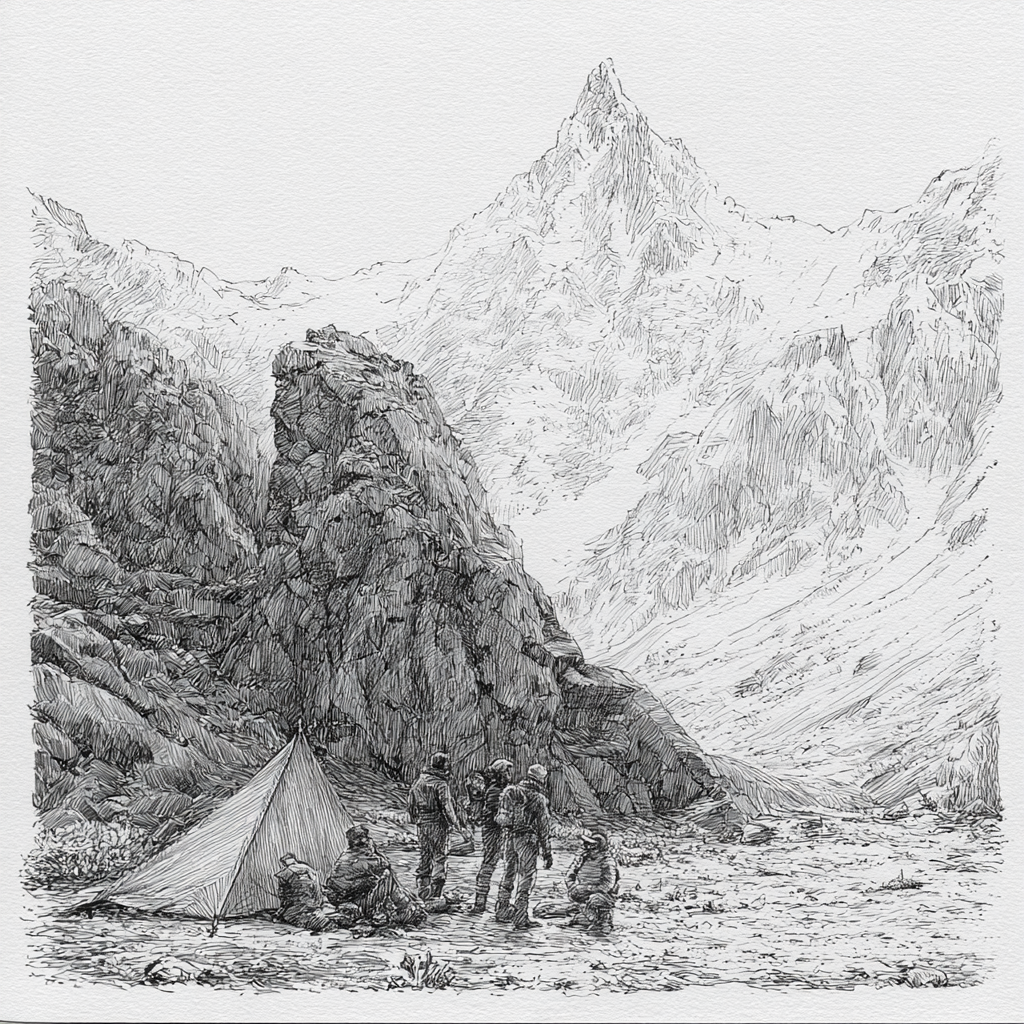
Like any exploration into new territory, the Athanor project started with an idea and an aspiration, not a map. Or, as Antonio Machado, had it:
"Traveller, there is no path, the path is made by walking."
So it’s a good time to look back and see where we are, and where we’ve been.
Fourteen posts in October 2025. One last month. The publishing record tells its own story of attention moving from writing about a thing to building it. What began here ten months ago as a metaphor and an unease has become a practice in formation, with pilots under way and an architecture half-built around it, so before the building of it absorbs all the light, I thought I’d set down how we got here; partly because the record deserves it, and partly because the way it happened is the best description I can offer of what the practice actually does.
In the work we now do at The Athanor, engagements run in tranches of three months, each with defined endpoints. A tranche ends at a waypoint; a place to stand and look back over the terrain before deciding whether to climb on. Base camp, in the image we keep returning to, is where you sort the kit and read the mountain. When things change quickly around us in can be easy to be absorbed in what we are doing, rather than taking stock, in case we need to change direction.
This, and the next two posts, is the Athanor’s own first tranche review, conducted in public, in three parts. This first part runs from the founding post in August 2025 to a decision in early November that, looking back, determined everything.
Kindling
The first post said what the name meant, and very little else. The Athanor, the furnace of the alchemists, was never about speed or spectacle; it held a steady flame for weeks while the materials inside it softened and became something new.
“Craft is slow fire.” A metaphor I trusted, and a sense sharpened over a thousand posts at Outside the Walls and New Artisans that something in the architecture of work was giving way. A plan, though, I did not have.
September furnished the space: a library, a set of sources, a commitment to three principles, and a standing invitation to a Wednesday call. The closing line of that founding commitment still seems to me the most accurate sentence I wrote all autumn: “The first step is simple: show up, and bring some kindling.” The Athanor began as a workshop held in common, an offshoot of the two blogs, addressed to companions. I need to be clear about that, because the question of what this place becomes, and for whom, runs under everything that follows.
Diagnosis
Then October happened. Fourteen posts in thirty-one days, the most I have written in any month before or since. The ideas arrived in a gang, and read back now they amount to a single argument made from several directions, though no single post knew it at the time.
The argument took shape like this. The structures we trained for are ageing faster than we are. Professional development teaches theory disconnected from consequence; corporations optimise for extraction rather than for the capability of the people inside them; content scales, and judgement does not; and the credentials we collect certify knowledge that technology now retrieves in seconds. Our careers turn out to be tenancies, and had my own renter’s moment when my blog host locked me out of my email list, and the post that followed, Going Freehold, found enclosure everywhere it looked: in our platforms, our software, our subscriptions, and the working lives we rent out on terms set by others.
Attention, meanwhile, was revealing itself as the scarcest luxury; the wealthy had already worked this out, and were quietly trading luxury watches for experiences that cannot be resold. Underneath it all sat the increments, the small degradations and displacements that gather unnoticed until, as Hemingway’s Mike Campbell said of bankruptcy, things change gradually and then suddenly.
The month also supplied a historical lineage. The Lunar Society met in Birmingham by the light of the full moon: fourteen core members, no constitution, no minutes; practitioners with skin in the game who crossed each other’s disciplines for fifty years and created the conditions for the Industrial Revolution, and I wrote about them in October as a precedent. What I underestimated was how much of what we are now building would turn out to be a translation of their conditions: small numbers, high trust, crossed boundaries, and real consequence.
There was a portrait of the watcher, too. On Precursors argued that the people who sense what is coming are rarely the people the dashboards reward; they are embedded outsiders, trusted enough to be heard and independent enough to see. Most of the people now in the Athanor’s orbit answer to that description, which is not a coincidence.
By the end of the month the posts had converged. The shift we are living through is “Not the surface details of which skills matter or which tools to use, but the architecture underneath: how work is bundled, priced, coordinated, and controlled.” Nothing in the year since has weakened that claim, and a good deal has confirmed it. We are unfamiliar territory, we are all beginners in understanding it, and we need each other.
Who It Was For
Threaded through the diagnosis was a portrait of a different kind, and it was the part readers answered. As the Cracks Appear described a person who had done everything right: career capital accumulated, professional autonomy earned, an excellence recognised within the walls that housed it, income at last exceeding expenditure; and then a ground-shift they had not anticipated, which arrived precisely when they had most to carry.
James Hollis calls it the Middle Passage. Our working lives moving faster than they once did, I suggested it now arrives more than once, and that the standard advice was written for people travelling light. Follow your passion assumes the freedom to take risks. Reinvent yourself assumes you can afford to be a beginner again. “This is the predicament we face: transformation under constraint. Change while carrying weight.” The post ended with an invitation that has outlived almost everything else from that month: you don’t have to do it alone.
Notice, though, who was being addressed. October’s reader was one of us; a companion at the same fire, in the same weather, invited to bring projects and shape the work in common. The room was a workshop with members. Hold that thought. It matters in part three.
The First Plan
Diagnosis demanded a response, and I did what a working lifetime had trained me to do: I wrote a prospectus. It is all still in the October archive, published in real time as it formed. Eight places at the fire. A commitment of twelve to eighteen months. Three tiers of membership and a sliding contribution based on capacity. Five possible configurations for the work, with one of them, the Emotional Architecture, chosen as the way in. A core group to be formed in November, settled over December, working by January. Readers responded; fourteen project proposals arrived. Anyone watching would have said a programme was being born, and for about three weeks, so would I.
The prospectus was sincere, and it was wrong. The error was in kind rather than in content. It assumed the work could be summoned on a schedule; that a group could be assembled the way a course is assembled; that the form could precede the trust it was meant to contain.
The Hinge
On the first Wednesday of November the group met as usual, and the conversation did what good conversations do: it told me something I was not ready to hear. The group we had was, as I described it at the time, “curious, questioning, and willing to take risks”, and it had formed itself. Trying to close it into a cohort to the beat of a calendar was an act of Kronos in a space that ran on Kairos; time as measure imposed on time as quality. Two days later I wrote Making Haste Slowly and set the plan aside. “I think we need to trust the right group to form of its own accord in Kairos time.” And then the sentence that became the hinge of the whole year: “This is much too important to rush.”
I want to be accurate about what that felt like, because the retrospective temptation is to dress it as wisdom; at the time it felt like failure, lightly worn. I had announced a structure in public, invited people into it, gathered their proposals, and then declined to build it, in front of the same people, with nothing to offer in its place except a conviction that forcing the form would kill what the form was meant to hold. A fool’s position, in the proper sense I wrote about later that winter: exposed, slightly ridiculous, and correct.
David Pye’s distinction between the workmanship of certainty and the workmanship of risk has since become load-bearing in the practice, and it names what happened that week. A prospectus is workmanship of certainty: the outcome specified before the work begins. What the Athanor needed was the other kind, where the result depends on judgement exercised while the work is in motion, and where the possibility of failure is the price of anything worth having. The November decision was the first time this publication applied that standard to itself. Launching would have been easier; launches are legible, and waiting is not.
From Base Camp
Looking back from the waypoint, the sorting is simple enough. The diagnosis held; nothing since has weakened it, the Wednesday fire still burns, and the lineage has deepened. The calendar, the tiers, and the cohort did not survive the winter, and are not mourned. What was set aside in November went into the compost rather than the bin, and the second part of this series follows it through the cold months: the two apprenticeships, conversations as living systems, the question of what an Athanor is actually for, and the answer that finally arrived, from an unexpected direction, in February.
For now I want to stay with the November moment, because the question it forced on this publication is the question the practice now holds on behalf of everyone who comes to work with us, at exactly the point where they are most tempted to reach for a plan because a plan would relieve the discomfort of not having one.
What forms, when you decline to force the form?
Comments ()